
Electrical & solar
Reliable power. Designed around real use.
A campervan electrical system should be designed around use, not around the biggest battery or inverter that will fit. What do you want to power, how long do you expect to stay away, and how often will the van be driven or connected to mains hook-up?
Start with what you need to run
We work backwards from the answers
A weekend camper may only need dependable charging, lighting and refrigeration. Regular touring can justify more battery capacity, solar and better monitoring. Longer off-grid stays or selected 230V appliances may require a larger lithium system and a correctly sized inverter.
Typical campervan loads include lighting, phones, USB devices, water pumps, compressor fridges and diesel heaters. Laptops, televisions, cameras and other equipment can also be supported when the battery capacity and charging sources are sized for the expected use.
Higher-demand appliances such as hairdryers, coffee machines, air fryers or electric cooking equipment change the calculation significantly. We will discuss realistic running times, inverter size, cable requirements and battery demand before they become part of the specification.
The right system is the one that does what you need it to do, without paying for capacity or equipment you are unlikely to use.
Designed around how you travel
- Weekend use — dependable leisure power with straightforward charging
- Regular touring — increased capacity, monitoring and solar assistance
- Off-grid travel — lithium storage, expanded solar and inverter capability
- Specific equipment — a system designed around known electrical loads rather than guesswork
Choosing the right equipment
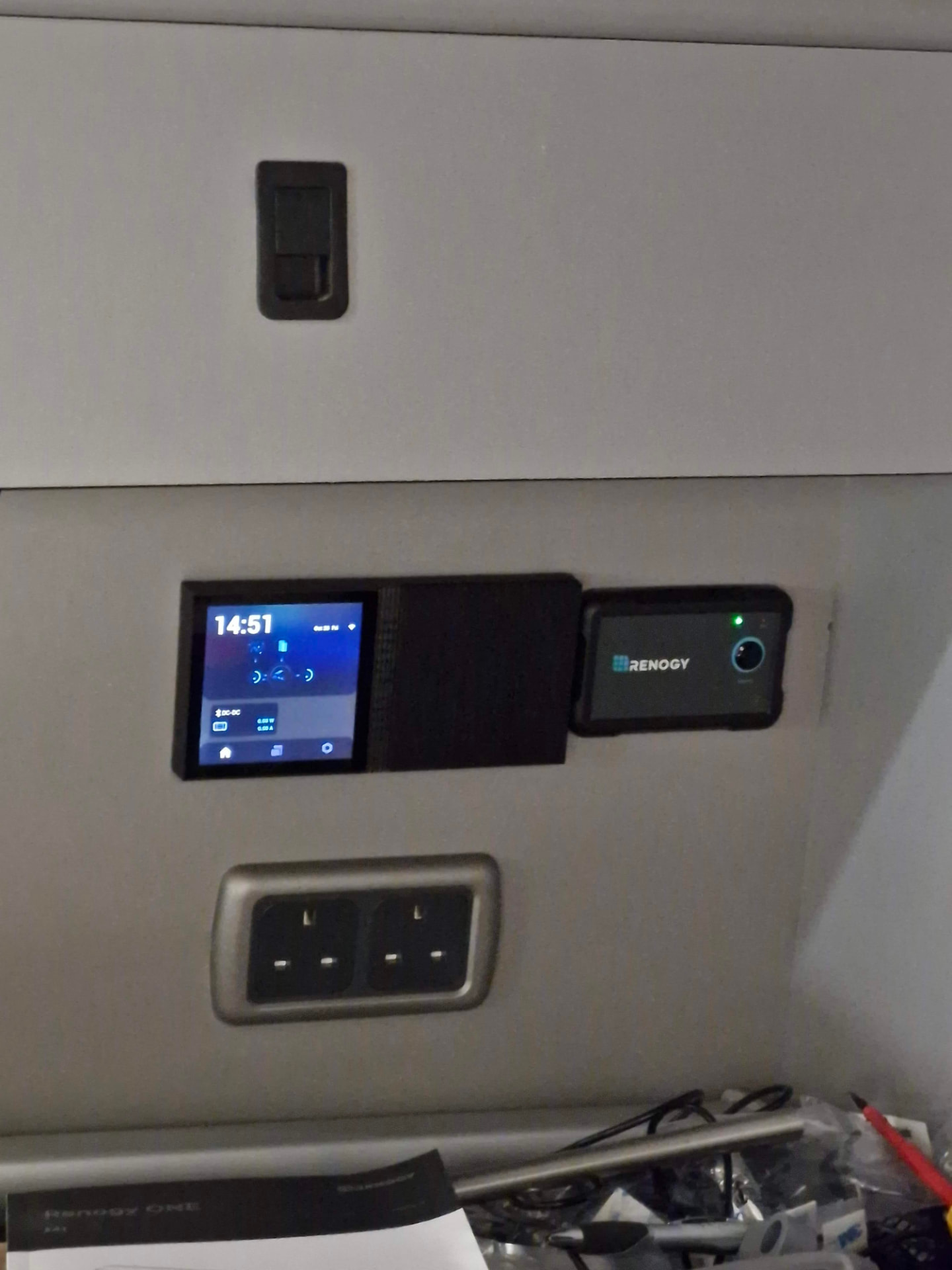
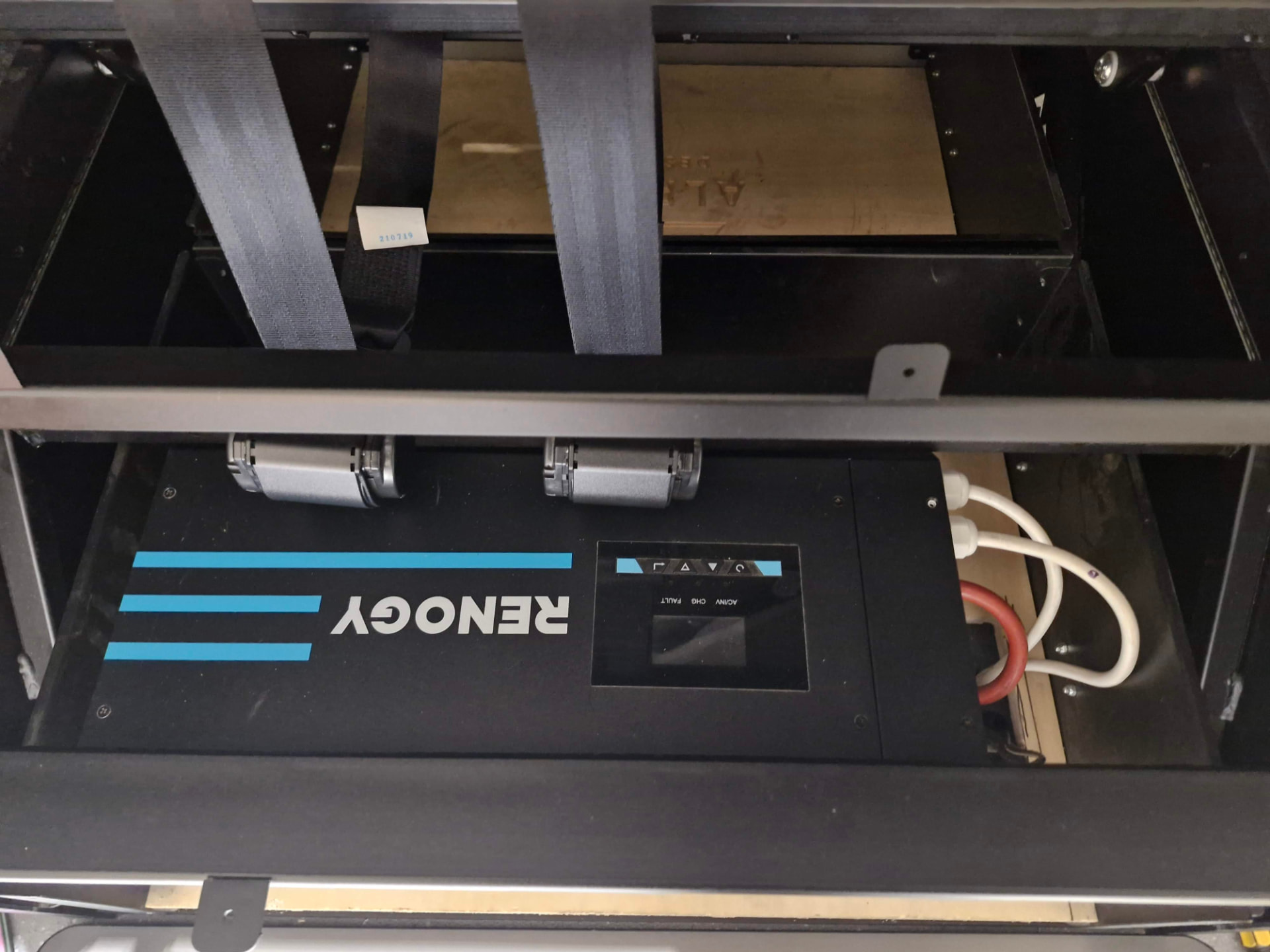
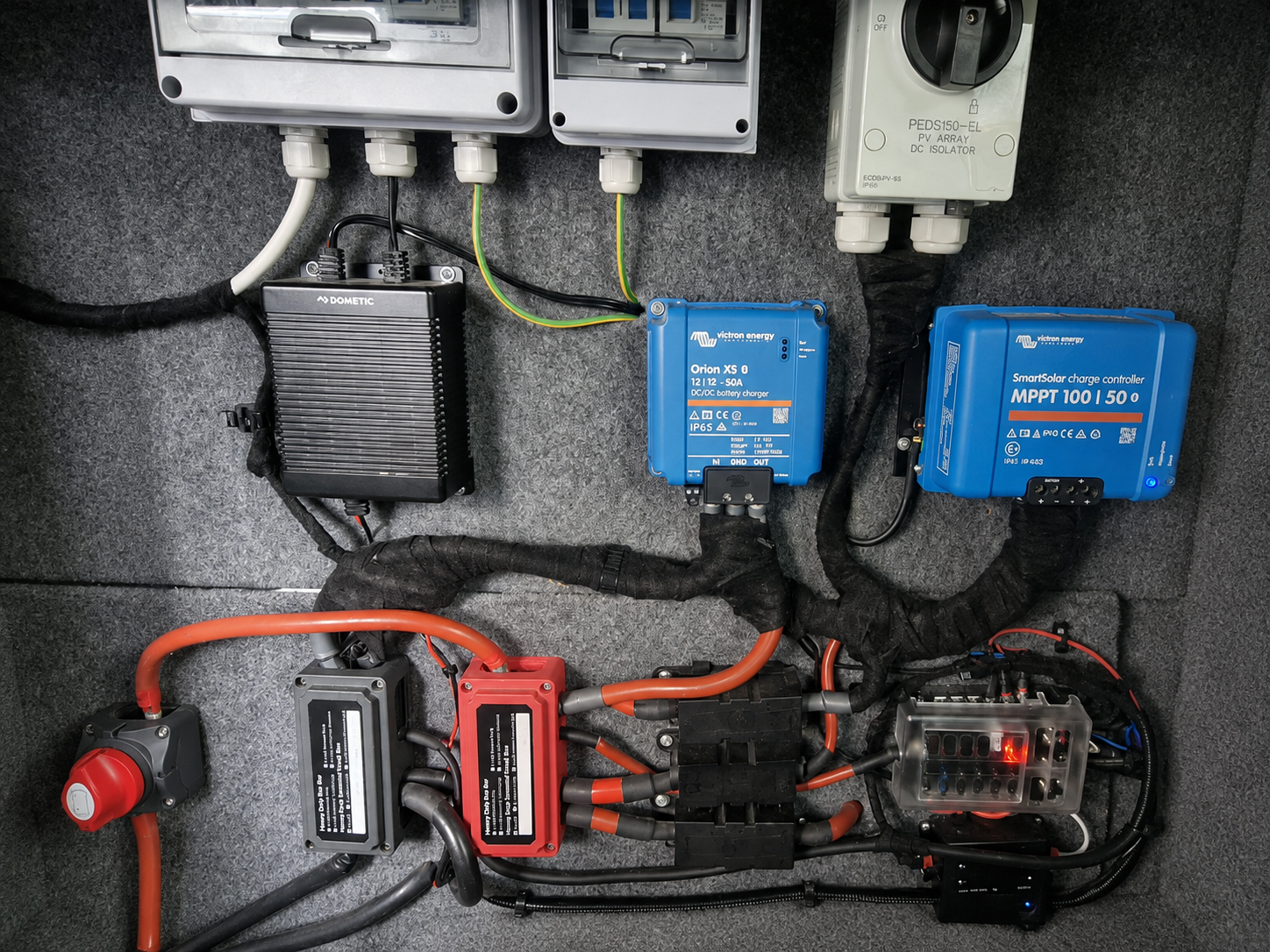
We use both Victron Energy and Renogy equipment, depending on the system, how the van will be used and the customer's budget.
Victron offers a wide range of charging, inverter, solar and monitoring equipment and works well where a more comprehensive system is required. Renogy gives us another good option, particularly where the requirement is more straightforward or where keeping the overall cost down is important.
We won't specify one brand just for the sake of it. We will talk through what you actually need, explain the options and build the electrical system around that.
- DC-DC chargers
- Mains battery chargers
- Inverters and inverter-chargers
- Solar charge controllers
- Battery monitoring and system displays
Lithium battery systems
Capacity matched to charging
Lithium is usually our first choice for new leisure systems where it suits the specification, because it offers high usable capacity for its size, fast charging and comparatively low weight. The battery itself is only one part of the design, however.
Capacity is selected against expected consumption and the available charging sources. Fitting a larger battery without enough alternator, mains or solar charging simply creates a larger battery that takes longer to recover.
Solar charging
Part of the charging system
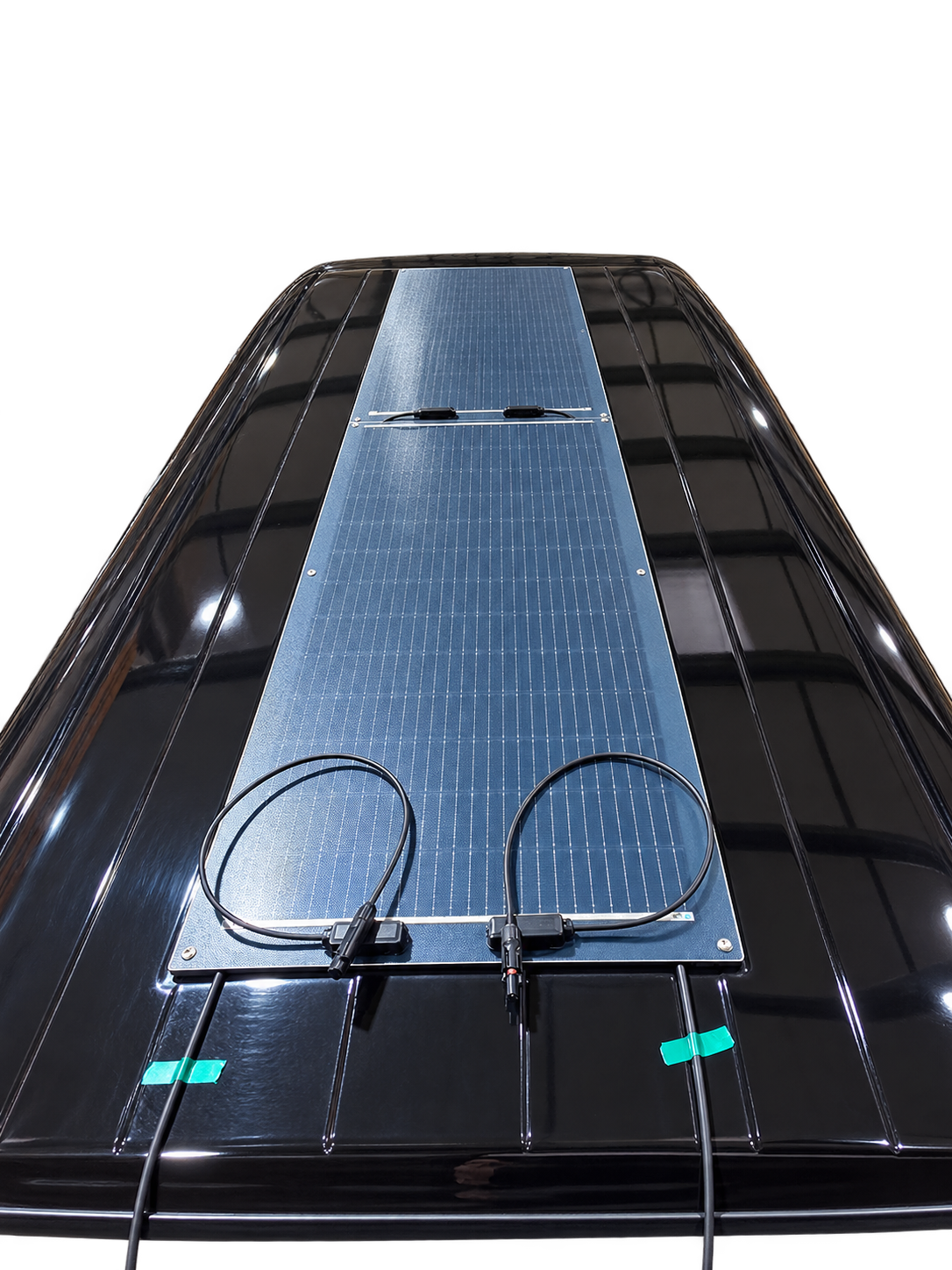
Roof-mounted solar can reduce reliance on hook-up and replace some of the energy used while the van is parked. It works alongside alternator and mains charging rather than replacing them, and panel size and position are planned with the roof, pop-top and any roof rails in mind.
Planning the electrical system alongside the roof, kitchen and appliances produces a tidier installation and avoids preventable compromises later.
Typical system direction
A starting point for the specification
Weekends with regular driving or hook-up access
Straightforward lithium leisure system with DC-DC and mains charging
Longer holidays with mixed campsites and off-grid stops
Increased capacity, monitoring and solar charging
Extended independent travel with selected 230V appliances
Higher-capacity lithium system with solar and a correctly sized inverter
Also considering diesel heating?
Guide pricing
What it typically costs
Guide prices from
- Solar installationfrom £575
- DC-DC charging / electrical upgradefrom £795
Prices shown are a guide. Every van and specification is slightly different, so we'll confirm the price before work starts.
Power without guesswork — for full conversions or standalone upgrades
Tell us what you want to run and how you expect to travel. We will design a system with the capacity and charging capability to match, then explain how it all works before you leave.